
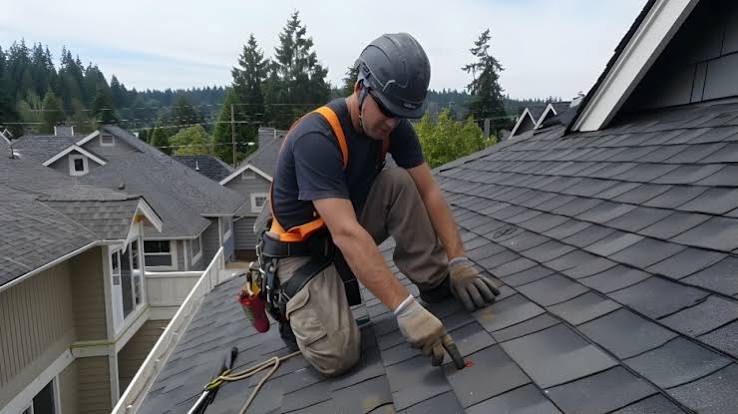
A damaged roof puts homeowners in an uncomfortable spot. The damage is real, the pressure to act fast is real, and the cost difference between a Wichita roof replacement and a repair can be several thousand dollars. Making the wrong call in either direction carries consequences: a repair that patches over a failing roof wastes money and delays an inevitable replacement; a replacement on a structurally sound roof that needed only targeted work is an unnecessary expense.
The decision is not a coin flip. It follows a clear set of measurable conditions. This guide walks through each one so homeowners can enter a contractor conversation informed, ask the right questions, and understand the reasoning behind a recommendation.
What a Roof Repair Actually Addresses
A repair is work that fixes a specific, contained problem without disturbing the rest of the roof system.
Typical repair scenarios include: replacing a small section of cracked or missing shingles, resealing or replacing flashing at a chimney, skylight, or vent pipe, clearing and resealing a blocked or leaking valley, and patching a section of damaged underlayment exposed by wind or hail impact.
The word “contained” is the key condition. A repair is appropriate when the damage is isolated, the surrounding material is structurally sound, and the deck beneath shows no rot, delamination, or movement. When those three conditions are met, a repair extends the roof’s service life at a fraction of replacement cost.
When those conditions are not met, a repair is a short-term fix on a system that is already failing.
The Conditions That Shift the Decision Toward Replacement
Several factors, evaluated together, indicate when replacement is the correct call. No single factor is definitive on its own. A contractor should assess all of them before recommending a path.
Roof age relative to material lifespan
Asphalt shingles carry a manufacturer lifespan that varies by grade. A roof approaching or past that threshold is in its final service years regardless of how the current damage looks. Repairing damage on a roof at the end of its material life delays replacement by months, not years, and means paying for both the repair and the replacement in a compressed window.
Deck condition
The deck is the structural layer beneath the shingles. Rot, delamination, or soft spots in the deck indicate moisture has penetrated the system over time, not just at the visible damage point. A deck in this condition cannot hold a new roof installation correctly. If the deck requires significant section replacement, the labor cost of that work often narrows the gap between repair and replacement considerably.
Damage spread
A single impact point, one missing shingle, or one failed flashing joint is a repair. Damage that covers more than 25 to 30 percent of the total roof surface, or that appears in multiple non-adjacent sections, indicates the material has degraded across the system. At that threshold, a repair addresses symptoms rather than the underlying condition.
Granule loss
Asphalt shingles shed granules as they age. Visible granule loss in gutters, on the ground below downspouts, or across large sections of the roof surface signals that the shingles are past their protective capacity. Shingles that have lost their granule coating no longer shed water effectively and cannot be restored by repair work.
Layering history
Building codes in most jurisdictions permit a maximum of two shingle layers before a full tear-off is required. If a roof already has two layers and the top layer is damaged, the only permitted path is a full tear-off and replacement. A contractor performing an inspection should count the layers at a roof edge and disclose this condition upfront.
Storm or hail damage scope
Hail strikes leave impact marks across the full roof surface because hail falls across the whole area. A hail-damaged roof rarely shows isolated damage in one spot. When an adjuster or contractor documents impact marks spread across multiple roof planes, that scope typically points to replacement rather than spot repair.
How the Inspection Process Should Work
A credible roof inspection does not start with a recommendation. It starts with observation and documentation.
The inspector should: walk the full roof surface and examine each plane, check the deck at any damaged sections by pressing for soft spots, examine the flashing at every penetration and edge, count the existing shingle layers, document granule loss across sections, photograph all findings, and explain the reasoning behind the recommendation in terms the homeowner can verify.
A written inspection report that details the conditions found, not just the conclusion, is a reasonable expectation. If a contractor recommends replacement without explaining the specific conditions that justify it, ask which of the factors above apply and ask to see the documentation.
Insurance Claims and What They Cover
Storm or hail damage changes the financial picture. Most homeowner’s insurance policies cover roof damage caused by a sudden storm event, subject to the policy’s deductible and any depreciation schedule.
The process matters: file the claim before authorizing any work, so the insurer can send an adjuster to document the pre-repair condition. An adjuster who inspects a roof after a repair has fewer observable conditions to assess. Filing first protects the homeowner’s ability to recover the full eligible amount.
Insurance typically covers repair or replacement of the damaged sections, not a full replacement driven by age or wear. The adjuster’s scope of damage determines coverage, not the homeowner’s or contractor’s preference.
Making a Confident Decision
The repair-or-replace decision is not a judgment call; it is an assessment against measurable conditions. Homeowners who understand those conditions arrive at a contractor conversation with better questions, recognize a thorough inspection versus a surface walk, and make a decision grounded in the actual state of the roof rather than the pressure of the moment.
The conditions that point clearly toward replacement are: age at or past material lifespan, deck damage across multiple sections, granule loss across the surface, damage covering more than 25 to 30 percent of roof area, and an existing two-layer stack. When fewer than two of those conditions are present and the deck is sound, a targeted repair is the right starting point.
For those looking for reliable roofing services in Wichita, KS, Apple Roofing provides professional solutions for residential and commercial properties throughout the area and surrounding Sedgwick County communities. The team handles roof replacement, repairs, hail damage inspections, and new roof installations, helping property owners protect their investments with durable roofing systems. Apple Roofing also offers free inspections to help homeowners assess their roofing needs and determine the best course of action.
View Your Top-Rated Roofing Partner in Wichita in a full screen map
Media Contact:
Company Name: Apple Roofing
Phone: (316) 799-3435
Address: 801 E Douglas Ave, 2nd Floor
City: Wichita
State: KS
ZIP Code: 67202
Country: United States
Website: https://appleroof.com/wichita-ks/
Social Media:
https://www.facebook.com/appleroofing
https://www.linkedin.com/company/apple-roofing-llc/
https://www.youtube.com/channel/UCMNRXjzM6GKfNh7hX8rRRfQ
https://www.instagram.com/appleroofing/

Sophia Bennett shares heartfelt love stories and romantic emotions that connect souls.Her words celebrate romance, deep feelings, and the beauty of true love.